
Here’s the short answer: yes, but not in the way most people expect. Love languages in marriage don’t work like a life hack or a checklist you print and stick to the fridge. They work slowly, almost invisibly, the way good sleep works. You don’t notice the difference in one night. But after a while, you realize you’re softer with each other.
Less reactive. More patient. That’s what learning your partner’s love language actually does: it changes the default way you reach for them.
Gary Chapman introduced the concept decades ago and it still holds up, not because it’s perfect, but because it names something real. The feeling of loving someone hard and them still feeling unloved. That gap. That’s what the 5 love languages for couples is really trying to close.
What Are Love Languages and Why Do They Matter in Marriage?
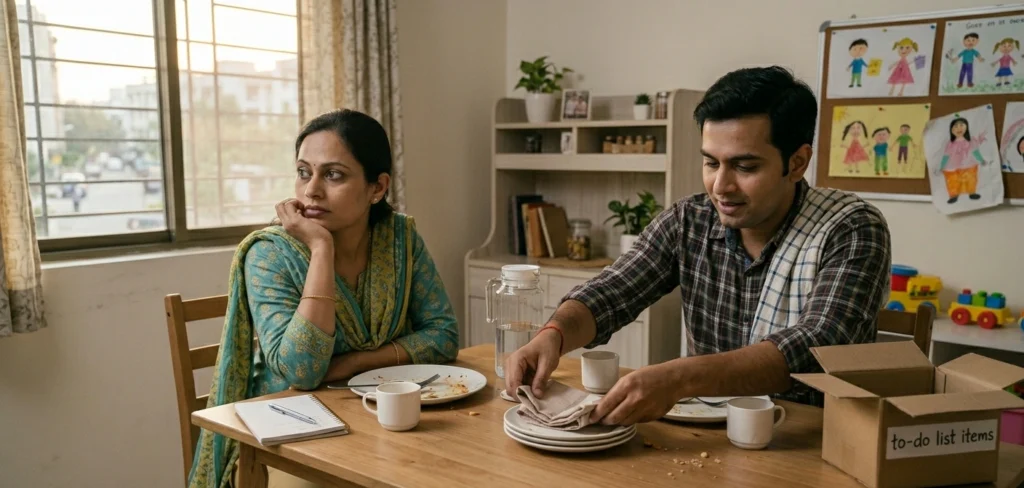
There are five, and most people know the list but fewer actually apply it, especially in long marriages where assumptions calcify into habits. Understanding love languages in marriage helps couples recognize how different expressions of affection are received and interpreted over time.
- Words of affirmation, verbal acknowledgment, genuine compliments, “I see you” moments
- Acts of service, doing things that ease your partner’s load, without being asked
- Receiving gifts, not materialism, but the feeling of being thought of
- Quality time, undivided presence, not parallel coexistence on the couch
- Physical touch, closeness, warmth, the small constant reminders that you’re still here
Here’s what tends to happen in marriage. Early on, you’re doing everything, texting good morning, planning dates, touching constantly. Then life comes in. Kids, work, exhaustion. And slowly, without meaning to, you default to your language, the one that feels natural to you, instead of theirs. This is one of the biggest reasons love languages in marriage become more important as relationships mature.
A husband who shows love through acts of service might be pouring himself out every single day. And his wife, whose primary language is quality time, is sitting across from him at dinner feeling completely alone. Both trying. Neither feeling it.
Love languages in marriage give you a framework to understand why that happens, and more importantly, what to do about it.
What Is the 7 7 7 Rule for Married Couples?

The 7-7-7 rule is a rhythm-based approach to keeping marriages alive:
- A date every 7 days
- A weekend away every 7 weeks
- A full vacation every 7 months
It sounds almost too structured. But underneath the numbers is something true, intentionality needs scheduling, or it simply doesn’t happen.
When you layer love languages in marriage on top of this framework, it gets interesting. Because of each date, each weekend, each trip, that’s where love languages live. A quality time person doesn’t just want presence. They want an undivided presence. No phones. Eye contact. Conversations that don’t end in to-do lists.
So if you’re doing your 7-7-7 dates but spending them half-distracted, you’re checking a box, not filling a tank. The rule gives you the when. Love languages give you what. Together, they’re quietly powerful. That’s How Keep Emotional Connection Alive in Long-Term Relationships
What Is the 3-3-3 Rule of Intimacy?
The 3-3-3 rule suggests:

- 3 minutes of meaningful eye contact or intentional connection daily
- 3 hours of quality time together weekly
- 3 days of physical closeness per week
Another rhythm rule. And again, it only lands if you understand what kind of connection your partner actually craves. This is where love languages in marriage become especially practical rather than theoretical.
Physical touch as a love language isn’t just about sex. It’s a hand on the back while passing in the kitchen. A forehead kiss before someone leaves for work. Small, constant reminders that you’re still choosing each other. For couples who’ve drifted, these tiny moments can feel enormous.
This is something we explore deeply at Intimacy Academy: how micro-moments of connection, repeated consistently, do more for a marriage than grand gestures ever could. The 3-3-3 rule, combined with understanding love languages for couples, creates a daily intimacy practice that feels less like work and more like tending something you genuinely love.
When Love Languages Feel Like They’re Not Working
You’ve read the book. Take the quiz. Had the big talk. And somehow you’re still in the same argument six months later. Here’s why that happens:
- Emotional debt blocks reception, if resentment has built up, new gestures can feel hollow or even suspicious
- Awareness isn’t fluency, knowing the language and actually speaking it under stress are completely different skills
- People’s languages shift, what your partner needed at 30 might not be what they need now
- One partner is trying, one isn’t, imbalance kills momentum faster than anything
According to research from the Gottman Institute, couples who regularly express appreciation and affection show significantly stronger relationship satisfaction over time, which maps directly onto what consistent love language practice builds.
How to Actually Use Love Languages Day to Day
Not theoretically. Actually. Small things, done consistently:
- Words of affirmation
One genuine, specific compliment daily, not “you look nice” but “the way you handled that this morning, I noticed.” - Acts of service
Stop waiting to be asked. Notice what drains them and do it first - Gifts
It’s never about money; it’s I saw this and thought of you. The thought, not the thing - Quality time
Put the phone down. Actually down. Make eye contact. Ask something real - Physical touch
Initiate the small stuff, the hand on the back, the forehead kiss, the shoulder squeeze in passing
Love languages in marriage work when they stop being a concept and become a daily orientation. A quiet habit. The way you instinctively reach for someone without thinking about it.
The Quiet Truth About Love Languages
They’re not magic. They won’t fix a broken marriage overnight or make hard conversations easy. But they shift something important, your attention. Instead of asking why they don’t appreciate what I do, you start asking what they actually need from me. That’s a softer question. A more useful one.
Love languages in marriage work best not as a quiz result you file away, but as a living practice. Something you return to. Something that grows with you.
If you’ve been feeling that quiet drift, that sense of being loved but not quite felt, it might not be a crisis. It might just be two people speaking different dialects of the same language. And that’s fixable. Gently, consistently, fixable.
Ready to go deeper into what your partner actually needs? The 7 Secrets of Long Lasting Relationshipsebook at Intimacy Academy, breaks down the real mechanics of lasting connection, practically, honestly, without fluff.Grab your copy here for ₹599
FAQs
Q.1 What is the 3 6 9 rule in relationships?
It refers to relationship check-ins at 3, 6, and 9-month intervals, reflecting on growth, recurring conflicts, and shifting needs. Paired with love languages for couples, these become a chance to reassess whether you’re still speaking each other’s language.
Q.2 What is the 72 hour intimacy rule?
It suggests reconnecting within 72 hours after a conflict, before distance hardens. In love languages in marriage, that reconnection should happen in your partner’s language specifically, not yours.
Q.3 Can love languages change over time in a marriage?
Yes, and this is more common than people realize. Life transitions like parenthood, grief, or career shifts often reshape what a person needs most. Revisiting the 5 love languages for couples every year or two is genuinely useful.
Q.4 What if partners have completely opposite love languages?
It creates friction, but it’s workable. The goal isn’t to naturally speak the same language, it’s to learn theirs. Discomfort is part of it. Couples who navigate opposite languages often build deeper intentionality than those who happen to match.
Q.5 How long does it take to see results from practicing love languages?
Most couples notice a shift within 4–6 weeks of consistent practice, not perfection, just consistency. The change is usually subtle at first. Less tension. More warmth. A feeling of being slightly more seen.
Q.6 Is the love language concept backed by research?
The original framework is more clinical observation than controlled study, but the underlying principles, emotional responsiveness, feeling understood, consistent affection, are well-supported in relationship psychology research.